
A lot of Web3 projects look brilliant on launch day. The art is sharp, the mint sells out, and the community Discord is buzzing. Then, six months later, nothing. No story, no direction, no reason for anyone to stay.
That pattern isn’t a market problem. It’s a leadership problem.
Founders and creative teams in Web3 entertainment carry responsibilities that go well beyond producing attractive assets. They define purpose, establish trust through transparency, and build the systems that allow character IP to grow into something with real staying power. Whether that means connecting characters to games, animation, or licensing deals, the decisions made early shape everything that follows. This article examines the roles behind strong projects, what meaningful transparency actually looks like, and how founders are expanding character worlds that last.
Why Founders and Creative Teams Set the Tone Early
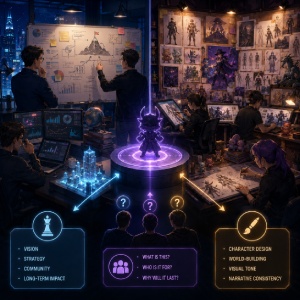
Think of a new digital collectible project like a teenager who hasn’t figured out who they are yet. Without a clear identity, every decision feels reactive. That’s the risk founders face in the earliest stages, and it’s exactly why leadership choices made in month one tend to echo for years.
Founders operate at the strategic level. They set the vision, define what the project stands for, and make the calls that determine whether a community forms around something meaningful or just around hype. That’s a heavier responsibility than most early roadmaps suggest.
Creative teams translate that vision into something people can actually see and feel. Character design, world-building, visual tone, and narrative consistency all sit in their hands. A well-designed character can carry an entire universe. A poorly conceived one signals that nobody thought past the mint.
Together, these two functions answer the three questions every potential user is quietly asking: what is this, who is it actually for, and why should it still exist in three years.
From Character Design to Community Planning, Every Layer Needs Intent
Strong Web3 entertainment projects don’t happen by accident. Behind every memorable character or collectible series, there’s a founding team making deliberate decisions across multiple creative layers – and those decisions either build toward something coherent or quietly undermine it.
Concept development sets the foundation. A character’s personality traits, backstory, and visual identity shouldn’t exist just for aesthetics. If a character is defined by loyalty and sacrifice, that trait can inform collectible rarity tiers, unlock conditions, or in-game roles. The design becomes functional, not decorative.
Storytelling gives the community something to move through together. When a project maps story arcs in advance, those arcs can drive real events – a villain’s arrival becomes a community challenge, a faction war becomes a voting mechanic.
Technical direction shapes whether any of this lands. Choosing a chain that supports dynamic metadata, for example, means characters can visually evolve as the story progresses. That’s the kind of integration that builds roadmap credibility. Every layer has to talk to the others.
Transparency Helps Users Understand the Project Behind the Hype
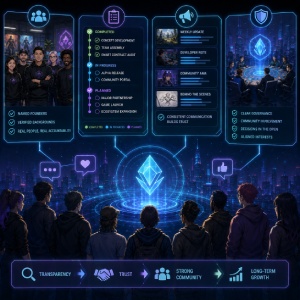
Web3 moves fast, and users are right to be skeptical. When a project launches with bold promises but no visible team, no roadmap, and no clear explanation of how decisions get made, that silence speaks loudly.
Visible founders change that dynamic. A named creative director with a background in animation, or a technical lead who has shipped previous blockchain products, gives users something concrete to evaluate. Public bios, linked professional histories, and even short founder interviews signal that real people are accountable for what gets built.
Roadmaps matter too, but only when they distinguish between what already exists and what is still being developed. Honest staging builds more confidence than polished ambition.
Steady communication reinforces all of it. Regular project updates, even brief ones acknowledging setbacks, show governance in action. Communities that understand a project’s structure and stated direction are far less likely to feel misled when timelines shift or plans evolve.
Great IP Creates More Than a Drop
When a founder and their creative team get everything right, a single collectible release becomes the starting point for something much larger. Strong leadership, genuine creative alignment, and transparent public information give people a real way to evaluate whether a project has substance behind it. Teams that share their vision openly, build characters with narrative depth, and plan deliberately across games, animation, merchandise, licensing, and community features are doing something different from teams chasing a quick mint. There’s no denying that attention in Web3 is cheap and brief. What converts that attention into a lasting brand is the long-term thinking that connects every touchpoint back to a coherent creative identity. The founders who understand this aren’t just launching drops. They’re building entertainment universes, one considered decision at a time.
