
Curated environments for presenting visual material have taken on a significance that extends well beyond image hosting. Digital art galleries now organize the visual identity, narrative cues, and audience interpretation that define online entertainment ecosystems. This article examines what these galleries contain, from character collections and concept art to trait systems and scene compositions, how they clarify the art direction and storytelling behind Web3 entertainment projects, and how collectible images, badges, and access-based media appear within gallery formats without functioning as financial instruments.
Defining Digital Galleries as Curated Visual Systems
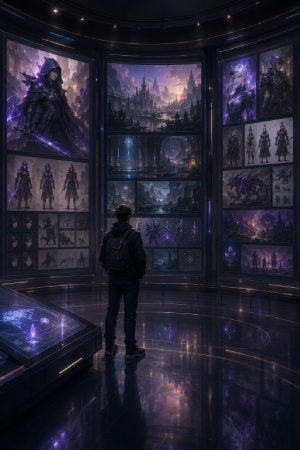
Curation is what separates a gallery from an archive. Where a simple image repository organizes files for retrieval, a digital gallery sequences visual material to communicate something – a tone, a world, an internal logic that individual assets cannot convey alone.
Contemporary digital galleries built around fictional IP typically draw from a wide range of material: character collections with documented trait variations, concept art showing early design decisions, environmental scenes that establish spatial mood, and mixed-media compositions linking still imagery to animation or audio. Each element carries metadata that contextualizes its relationship to the broader project, functioning less like a caption and more like a curatorial note.
Interface design carries significant interpretive weight here. The order in which a viewer encounters a brooding character study versus an expansive world-building scene shapes how they read the project’s visual identity. Some galleries built around Web3 entertainment properties use thematic sequencing to guide that reading, grouping trait studies by rarity class or narrative arc rather than by simple category.
There’s no denying that this approach asks more of the viewer than a sales grid does. The reward is comprehension rather than mere exposure – a reader who finishes the gallery understands what the project looks like and, more usefully, why it looks that way.
From Character IP to Story Worlds: Why Galleries Matter
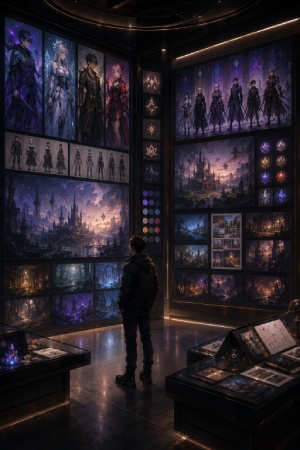
Curated presentation does something that a single image rarely can: it reveals the logic behind a visual system. When character designs are displayed in sequence – across costume variants, environmental scenes, and thematic groupings – recurring motifs become legible. A color palette that might seem incidental in isolation reads as deliberate when repeated across thirty character renders. Audiences begin to understand not just what a character looks like, but what the world they inhabit feels like.
For Web3 entertainment projects, this interpretive function carries particular weight. Collectible images, access badges, and trait-based character collections often encode narrative hierarchy and art direction that users may not initially recognize. A gallery format makes those decisions visible, connecting costume systems and scene construction to the broader fictional world they serve.
There’s no denying that brand coherence depends on consistency being perceived, not merely intended. When a project’s concept art, character IP, and environmental designs appear within a single organized framework, audiences can trace the visual logic that unifies them. That legibility builds genuine understanding of a project’s creative identity, which is something scattered social media posts rarely achieve with the same clarity.
Gallery Formats Extend Access Without Defining Ownership
Collectible images, NFTs, badges, and access-based media occupy a specific and often misread position within digital exhibition design. When these items appear inside a gallery format, they function primarily as viewable artifacts, not as financial instruments or proof of title. A character badge rendered alongside concept art reads, in that context, as a status marker within the project’s visual language. It signals participation, affiliation, or progression through a fictional world rather than asserting any legal or economic claim.
Some projects use gallery-embedded media to differentiate tiers of engagement. Unlockable scenes, extended lore documents, or animated variants may become visible only after certain thresholds are met, creating layers of contextual access without requiring ownership language to frame them. The gallery becomes a structured record of the project’s visual ecosystem, where each item carries narrative weight.
There’s no denying that this approach reshapes how audiences relate to collectible media. Viewed as artifacts of a fictional world rather than assets in a portfolio, they accumulate cultural meaning through curation, context, and continuity. Digital galleries, when designed with this intention, function as structured instruments for communicating artistic identity, sustaining fictional continuity, and producing cultural meaning in emerging media environments. They are not peripheral showcases but primary sites where a project’s creative authority is established and maintained.
